

The profile that structures and secures organisations
In every company, certain profiles bring something fundamental: reliability.
They organise, secure, execute with rigour and maintain a high level of quality even when the environment becomes complex.
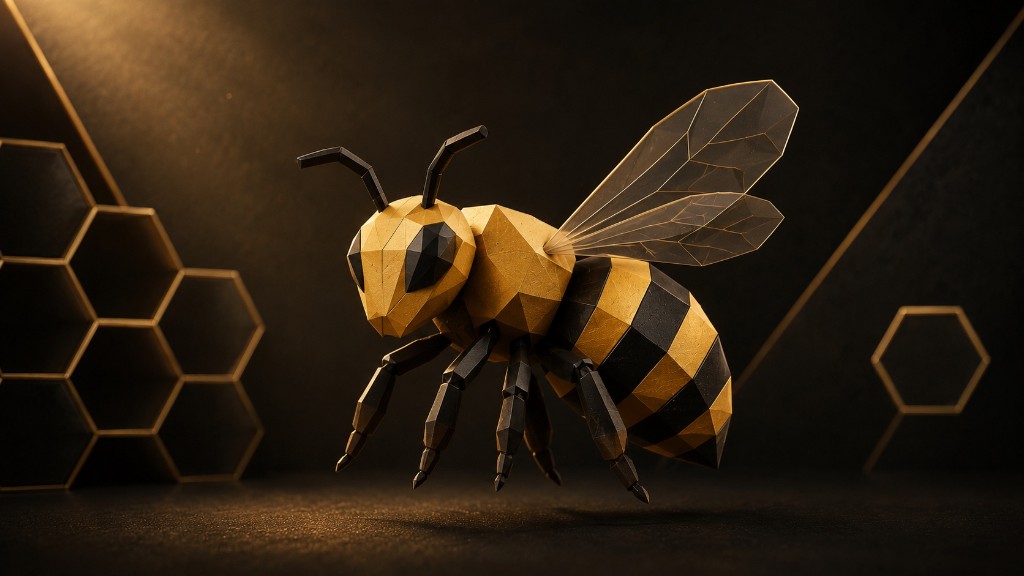
In the T8 method, this behaviour corresponds to the Bee.
The Bee is not the most visible or the most demonstrative profile.
Yet in high-performing organisations, it often becomes indispensable.
Where some profiles accelerate, improvise or take risks, the Bee seeks above all to:
- structure,
- secure,
- stabilise,
- execute cleanly.
The T8 method: understanding human behaviour
The T8 method is a behavioural analysis method built around 8 major animal archetypes.
Each archetype represents a natural way of operating in:
- decision-making,
- stress management,
- conflict,
- performance,
- change,
- team dynamics.
Important:
In the T8 method, the animal represents only behaviour.
It describes neither:
- deep motivations,
- psychological drivers,
- nor communication styles.
These dimensions are analysed separately within the method.
The Bee therefore describes here a way of acting, executing and securing one’s environment.
The behaviour of the Bee
The Bee is a profile oriented towards:
- structure,
- organisation,
- reliability,
- discipline,
- stability.
Its way of operating relies mainly on:
- rigour,
- perseverance,
- time management,
- methodology,
- risk aversion.
Unlike the Cheetah, which seeks rapid adaptation, or the Lion, which seeks impact, the Bee seeks above all to guarantee clean, stable and controlled execution.
Its natural instinct:
organise, secure, execute correctly.
How to recognise a Bee at work?
The Bee is often the person who:
- structures projects naturally,
- anticipates errors,
- respects processes,
- organises priorities,
- maintains a high level of quality,
- follows topics through to the end.
In meetings, they may:
- ask clarifying questions,
- bring back method,
- identify operational risks,
- flag oversights,
- ask for concrete plans.
Within organisations, the Bee often becomes:
- the operational stabiliser,
- the guarantor of quality,
- the reliable profile that teams lean on.
The main strengths of the Bee
A strong rigour in execution
The Bee likes work well done.
It often brings:
- precision,
- method,
- organisation,
- consistency,
- discipline.
In many teams, this is the profile that turns ideas into something genuinely usable.
Excellent operational management
The Bee naturally thinks in terms of:
- processes,
- deadlines,
- priorities,
- organisation,
- optimisation.
It secures projects and reduces the risks linked to improvisation or lack of preparation.
It is a particularly effective profile in:
- operations,
- project management,
- quality,
- administration,
- roles requiring precision.
Strong reliability
The Bee often inspires trust.
When it commits to something, it generally seeks to:
- honour its commitments,
- deliver properly,
- maintain a high standard,
- ensure stable continuity.
Within organisations, it often becomes a quiet but essential pillar.
The limits of the Bee
Like all behavioural profiles, the Bee also has areas to watch.
A difficulty with improvisation
The Bee likes to anticipate and structure.
Very chaotic or unpredictable environments can tire it quickly.
It may struggle with:
- constant change,
- the absence of a framework,
- impulsive decisions,
- disorganised environments.
Its main risk:
wanting to secure too much before moving forward.
A tendency towards perfectionism
The Bee often seeks to produce quality work.
But this demand can sometimes become excessive:
- difficulty delegating,
- fear of error,
- excessive control,
- slowness in decision-making,
- overload linked to details.
In certain situations, it may favour perfection at the expense of speed.
A resistance to rapid change
The Bee generally prefers:
- stable environments,
- clear rules,
- controlled processes.
Sudden transformations or constant change can generate:
- stress,
- mental fatigue,
- loss of bearings,
- defensive rigidity.
The Bee under pressure
Under stress, the Bee tends to:
- control more,
- take refuge in details,
- raise its level of demand,
- become more rigid,
- try to secure everything.
It copes particularly poorly with:
- disorder,
- lack of preparation,
- constant change,
- impulsive decisions,
- unstable environments.
How to manage a Bee
The Bee performs when given:
- a clear framework,
- precise responsibilities,
- structured objectives,
- coherent processes,
- a stable environment.
Conversely, it disengages when:
- everything is constantly changing,
- priorities are vague,
- the organisation lacks structure,
- decisions become inconsistent.
The right balance generally consists of:
- giving it enough of a framework to secure the way it works,
- while avoiding locking it into excessive rigidity.
The profiles that naturally work well with the Bee
The Shepherd
The Shepherd brings:
- cohesion,
- relational stability,
- human coordination.
The Bee brings:
- organisation,
- structure,
- operational reliability.
This combination works particularly well in organisations that require:
- stability,
- cooperation,
- continuity,
- rigorous execution.
The Owl
The Owl shares with the Bee:
- a taste for precision,
- structured thinking,
- analysis,
- risk control.
The Owl brings more:
- strategic perspective,
- rational analysis,
- critical thinking.
The Bee brings:
- execution,
- discipline,
- operational continuity.
Together, they can form an extremely solid duo in environments that require rigour and reliability.
The Eagle
The Eagle brings:
- vision,
- strategy,
- long-term projection.
The Bee turns this vision into:
- structure,
- organisation,
- concrete execution.
This complementarity is very effective in growing organisations.
The natural tensions with the Bee
The Cheetah
The Cheetah values:
- speed,
- improvisation,
- rapid adaptation,
- flexibility.
The Bee values:
- method,
- stability,
- preparation,
- operational control.
Tensions generally appear when:
- the Bee finds the Cheetah disorganised,
- the Cheetah finds the Bee too slow or too rigid.
Yet these profiles can become highly complementary:
- the Cheetah opens up possibilities,
- the Bee secures execution.
The Ram
The Ram likes:
- immediate action,
- risk,
- intensity,
- acceleration.
The Bee prefers:
- to analyse before acting,
- to structure,
- to reduce risks,
- to move forward methodically.
The Ram may perceive the Bee as too cautious.
The Bee may see the Ram as impulsive or unpredictable.
This opposition often appears in high-pressure environments.
The environments where the Bee excels
The Bee is often very effective in:
- project management,
- operations,
- quality,
- administration,
- finance,
- environments requiring rigour and precision,
- structured organisations.
Conversely, it may suffer more in:
- chaotic environments,
- highly disorganised organisations,
- structures that constantly change direction,
- contexts where everything relies on improvisation.
What to remember
The Bee is not a profile of speed.
It is a profile of reliability.
Where some improvise, it structures.
Where some accelerate, it secures.
Where some take risks, it guarantees stability.
In modern organisations, the Bee often becomes an essential factor of solidity and operational continuity, because a company only grows sustainably when it knows how to turn ideas into reliable execution.
About the T8 method
The T8 method was created by Tennessee Veldeman.
It distinguishes several complementary dimensions of human functioning:
- behaviour,
- communication styles,
- psychological drivers,
- relational dynamics.
The aim is not to put people into boxes, but to better understand the natural differences in how people operate in order to improve:
- management,
- recruitment,
- communication,
- collective performance.
T8 is today the official distributor of the T8 method.