

The profile that naturally takes the lead
In most organisations, some profiles naturally take control of situations.
They decide quickly, take on responsibility, set a direction and move forward with strong intensity.
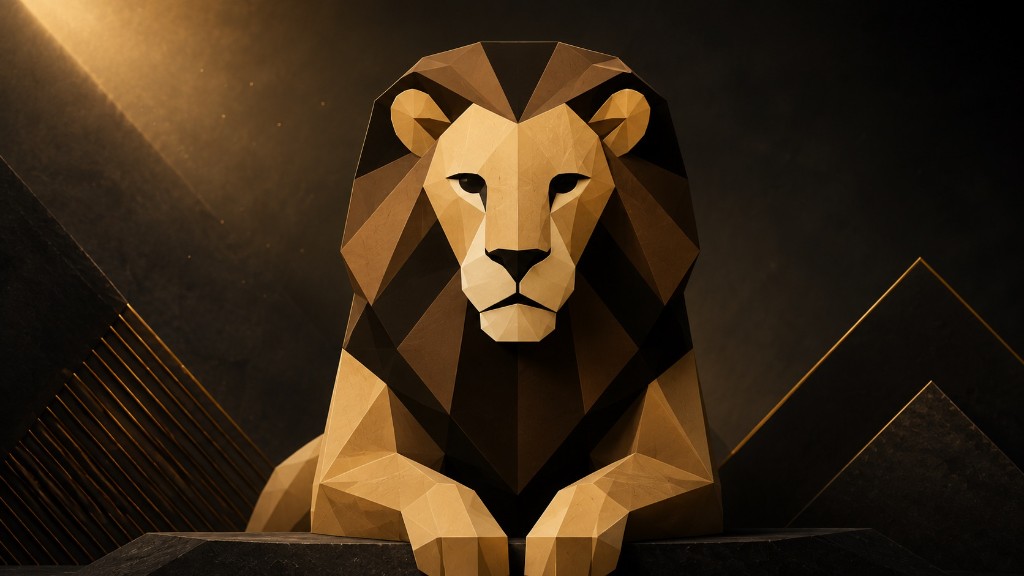
In the T8 method, this behaviour corresponds to the Lion.
The Lion is not only an authoritative or dominant profile.
Above all, it is a profile oriented towards:
- impact,
- responsibility,
- decision-making,
- ambition,
- leadership.
In demanding, competitive or high-pressure environments, the Lion often becomes a driving figure.
The T8 method: understanding human behaviour
The T8 method is a behavioural analysis method built around 8 major animal archetypes.
Each archetype represents a natural way of functioning in:
- decision-making,
- stress management,
- conflict,
- performance,
- change,
- team dynamics.
Important:
In the T8 method, the animal represents only behaviour.
It describes neither:
- deep motivations,
- psychological drivers,
- nor communication styles.
These dimensions are analysed separately within the method.
The Lion therefore describes here a way of acting, deciding and managing one’s environment.
The Lion’s behaviour
The Lion is a profile oriented towards:
- leadership,
- control,
- impact,
- assertion,
- decision-making.
Its way of functioning rests mainly on:
- natural leadership,
- assertiveness,
- ambition,
- decision-making confidence,
- emotional control.
The Lion likes to:
- steer,
- lead,
- influence,
- move things forward,
- keep control of important situations.
Its natural reflex:
decide, move forward, take responsibility.
How to recognise a Lion at work
The Lion is often the person who:
- makes decisions quickly,
- naturally takes on leadership,
- steps in when a situation becomes ineffective,
- moves forward with confidence,
- looks for concrete results,
- copes poorly with inaction.
In meetings, they may:
- get straight to the point,
- take back control of a discussion,
- quickly challenge weak ideas,
- set a high pace,
- speak up naturally.
Within organisations, the Lion often becomes:
- the decision-maker,
- the driver,
- the natural manager,
- the profile who takes difficult situations in hand.
The Lion’s main strengths
A strong capacity for leadership
The Lion naturally takes the lead in situations.
Even without an official title, they can become:
- the reference point,
- the driving force,
- the profile that others follow in important moments.
They perform particularly well when:
- a quick decision is needed,
- a team lacks direction,
- the context becomes tense,
- difficult decisions have to be made.
A strong capacity for decision-making
The Lion copes relatively well with decision-making pressure.
Where some profiles hesitate for a long time, the Lion prefers to:
- decide,
- move forward,
- adjust afterwards if necessary.
This speed often allows them to:
- unblock situations,
- accelerate execution,
- create movement within organisations.
A strong results orientation
The Lion seeks concrete impact.
They like to:
- reach objectives,
- win,
- progress,
- build,
- achieve visible results.
This is often a high-performing profile in:
- company leadership,
- entrepreneurship,
- negotiation,
- management,
- competitive environments.
The Lion’s limits
Like all behavioural profiles, the Lion also has areas to watch.
A tendency towards control
The Lion may sometimes want to:
- supervise everything,
- decide alone,
- control excessively,
- impose their pace on others.
Their main risk:
confusing leadership with domination.
When stress increases, this tendency can become stronger.
Impatience with slowness
The Lion finds it hard to tolerate:
- indecision,
- endless discussions,
- repeated hesitation,
- a lack of commitment.
They may then become:
- abrupt,
- directive,
- less attentive,
- excessively results-focused.
Difficulty showing vulnerability
The Lion likes to project:
- mastery,
- solidity,
- confidence.
They may therefore find it hard to:
- ask for help,
- show their doubts,
- acknowledge certain weaknesses.
In some situations, this can create relational distance with the team.
The Lion under pressure
Under stress, the Lion tends to:
- take back more control,
- speed up decisions,
- become more directive,
- raise their level of expectation,
- reduce their tolerance for mistakes.
They cope particularly poorly with:
- loss of control,
- inaction,
- incompetence,
- unclear environments,
- disengaged teams.
How to manage a Lion
The Lion performs when given:
- responsibilities,
- autonomy,
- ambitious objectives,
- room to act,
- stimulating challenges.
Conversely, they disengage when:
- they feel needlessly limited,
- everything becomes excessively procedural,
- decisions are constantly slowed down,
- the environment lacks ambition.
The right balance generally consists of:
- giving them autonomy,
- while maintaining a clear framework and intelligent checks and balances.
The profiles that naturally work well with the Lion
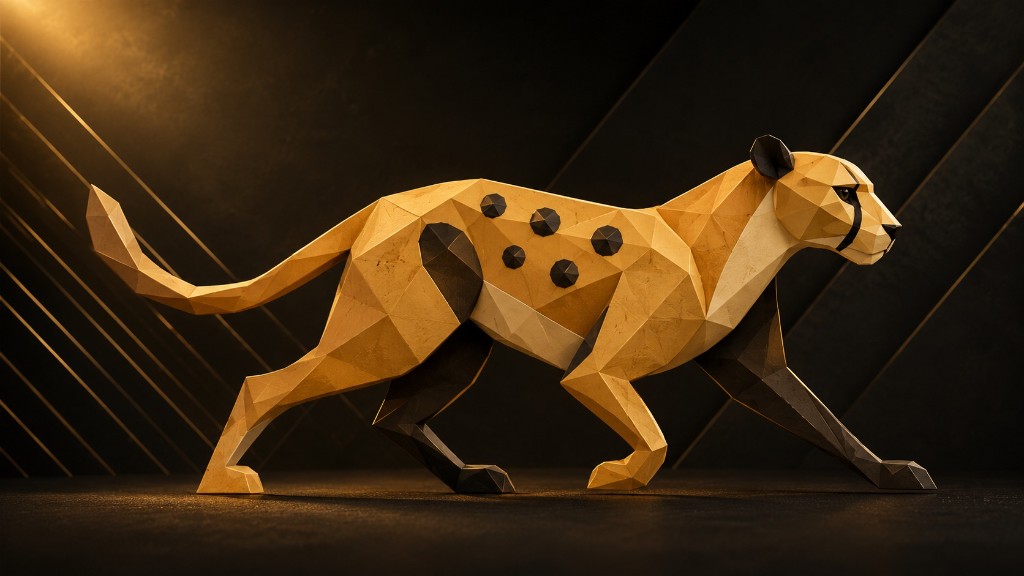
The Cheetah
The Lion brings:
- direction,
- leadership,
- a vision of impact.
The Cheetah brings:
- speed,
- adaptability,
- operational creativity.
This combination can become extremely powerful:
- the Lion sets the course,
- the Cheetah accelerates execution.
This is often a high-performing duo in:
- startups,
- business,
- competitive environments.
The Eagle
The Eagle brings:
- strategic vision,
- perspective,
- planning.
The Lion brings:
- decision,
- execution,
- the ability to rally others.
Together, they can form a very strong pairing:
- the Eagle builds the vision,
- the Lion turns that vision into concrete movement.
The Ram
The Ram shares with the Lion:
- energy,
- a taste for challenge,
- action,
- intensity.
This combination often creates:
- a great deal of speed,
- strong offensive capacity,
- a high-performance culture.
The risk:
- a rapid rise in tension if neither of the two slows down.
Natural tensions with the Lion
The Shepherd
The Shepherd values:
- listening,
- collective balance,
- cooperation,
- relational harmony.
The Lion values more:
- efficiency,
- speed,
- decision-making,
- performance.
Tensions generally appear when:
- the Shepherd finds the Lion too hard or too dominant,
- the Lion finds the Shepherd too slow or too accommodating.
Yet these profiles can become highly complementary:
- the Lion moves things forward,
- the Shepherd stabilises the group.
The Bee
The Bee likes:
- processes,
- method,
- security,
- rigorous execution.
The Lion may perceive this as:
- a brake,
- a burden,
- a lack of agility.
For its part, the Bee may perceive the Lion as:
- too impulsive,
- too demanding,
- insufficiently attentive to detail.
This opposition is common in strongly performance-oriented organisations.
The environments where the Lion excels
The Lion is often highly effective in:
- company leadership,
- entrepreneurship,
- management,
- negotiation,
- competitive environments,
- crisis management,
- high-responsibility roles.
Conversely, they may struggle more in:
- very passive environments,
- slow structures,
- organisations without a clear vision,
- roles with very little autonomy or impact.
Key takeaways
The Lion is not simply a dominant profile.
It is a profile of responsibility and impact.
Where some hesitate, the Lion decides.
Where some wait, the Lion moves forward.
Where some seek stability, the Lion seeks movement and results.
In modern organisations, the Lion often becomes a powerful driver of transformation and performance, provided that their leadership is properly channelled and balanced.
About the T8 method
The T8 method was created by Tennessee Veldeman.
It distinguishes several complementary dimensions of human functioning:
- behaviour,
- communication styles,
- psychological drivers,
- relational dynamics.
The aim is not to put individuals into boxes, but to better understand natural differences in functioning in order to improve:
- management,
- recruitment,
- communication,
- collective performance.
T8 is today the official distributor of the T8 method.