


The profile that sees further than the others
In some organisations, certain profiles have a particular ability: to rise above the situation.
They analyse long-term trajectories, anticipate change and build overarching visions where others stay focused on the immediate day-to-day.
In the T8 method, this behaviour corresponds to the Eagle.
The Eagle is not necessarily the fastest or the most outspoken profile.
But when it comes to:
- thinking strategy,
- anticipating,
- structuring a vision,
- steering over time,
… it often becomes a key player in ambitious organisations.
The T8 method: understanding human behaviour
The T8 method is a behavioural analysis method built around 8 major animal archetypes.
Each archetype represents a natural way of operating when it comes to:
- decision-making,
- managing stress,
- conflict,
- performance,
- change,
- team dynamics.
Important:
In the T8 method, the animal represents behaviour only.
It does not describe:
- deep motivations,
- psychological drivers,
- or communication styles.
These dimensions are analysed separately within the method.
The Eagle therefore describes a way of acting, anticipating and steering one’s environment.
The Eagle’s behaviour
The Eagle is a profile oriented towards:
- vision,
- strategy,
- anticipation,
- projection,
- mastery.
Its way of operating rests mainly on:
- planning,
- ambition,
- clear-headedness under pressure,
- the ability to step back,
- an overall vision.
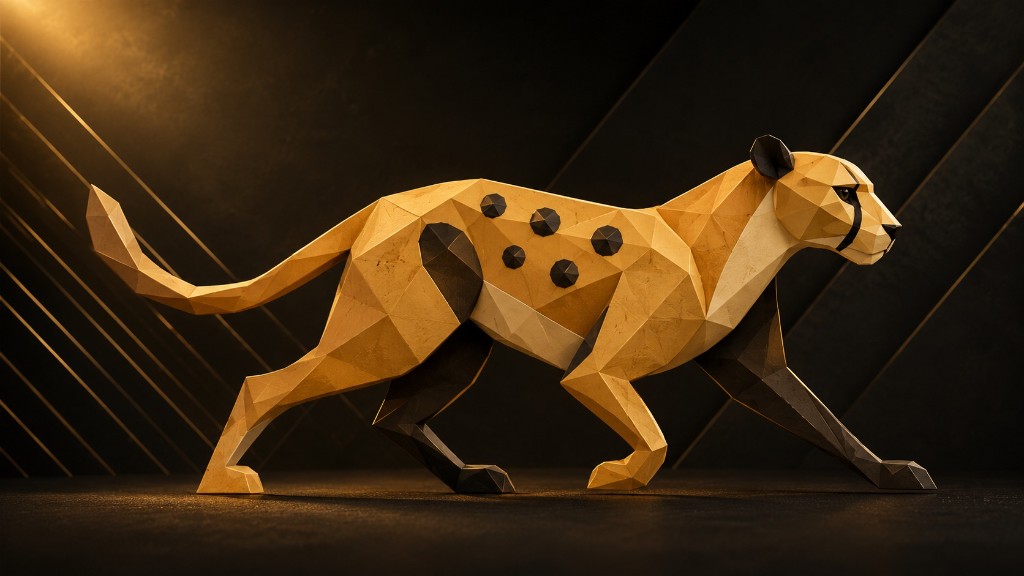
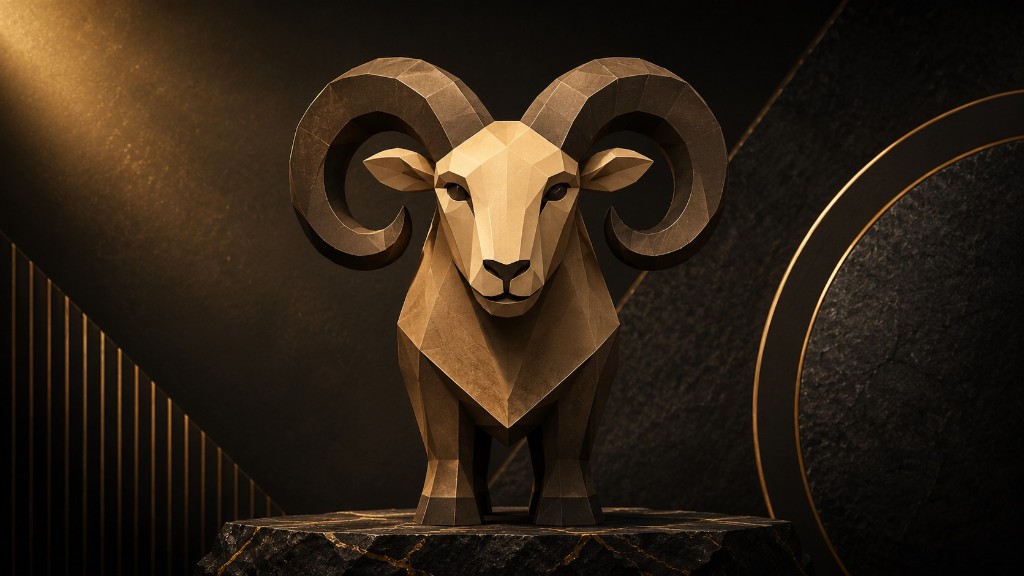
Unlike the Ram, who acts quickly, or the Cheetah, who adapts on the move, the Eagle above all seeks to understand the overall trajectory before acting.
Its natural instinct:
to rise above, anticipate and build a coherent direction.
How to recognise an Eagle at work
The Eagle is often the person who:
- thinks several moves ahead,
- looks for an overall vision before deciding,
- structures long-term trajectories,
- analyses future consequences,
- keeps perspective in complex situations,
- avoids impulsive decisions.
In meetings, they may:
- refocus discussions on strategic issues,
- ask questions about the longer view,
- challenge overall coherence,
- slow down decisions that are too short-term,
- bring a big-picture perspective.
Within organisations, the Eagle often becomes:
- the strategist,
- the visionary,
- the long-term leader,
- the profile who structures the overall direction.
The Eagle’s key strengths
A strong strategic vision
The Eagle often sees further than other profiles.
It naturally thinks in terms of:
- trajectory,
- development,
- future consequences,
- overall coherence,
- long-term impact.
This ability often allows it to:
- anticipate change,
- avoid certain strategic mistakes,
- build solid directions over time.
A strong capacity for anticipation
The Eagle constantly analyses:
- weak signals,
- future risks,
- emerging opportunities,
- underlying trends.
Where some profiles react to the present, the Eagle seeks to prepare for the future.
This quality becomes particularly valuable in:
- company leadership,
- strategy,
- development,
- complex environments.
Clear-headedness under pressure
The Eagle often keeps its perspective even in tense periods.
It can:
- maintain an overall vision,
- avoid emotional reactions,
- make considered decisions,
- keep a stable trajectory.
In times of crisis, this ability to step back becomes a major advantage.
The Eagle’s limits
Like all behavioural profiles, the Eagle also has areas to watch.
A tendency to stay away from operations
The Eagle enjoys strategic height.
But at times it may:
- detach itself from the field,
- underestimate operational constraints,
- remain too conceptual,
- lose sight of everyday realities.
Its main risk:
thinking strategy without sufficiently factoring in execution.
Difficulty with disorganised environments
The Eagle works best in:
- coherent structures,
- well-steered organisations,
- environments where a vision exists.
Constant chaos or excessive improvisation can quickly wear it down.
High intellectual standards
The Eagle finds it hard to tolerate:
- inconsistent decisions,
- a lack of vision,
- short-term approaches,
- poorly built strategies.
In some situations, this can give it an image that seems:
- demanding,
- distant,
- elitist,
- hard to please.
The Eagle under pressure
Under stress, the Eagle tends to:
- step back even further,
- reinforce strategic control,
- analyse more deeply,
- slow down certain decisions,
- seek to secure the overall trajectory.
It copes particularly poorly with:
- chaos,
- lack of preparation,
- impulsive decisions,
- environments with no clear direction,
- inconsistent strategies.
How to manage an Eagle
The Eagle performs when given:
- a clear vision,
- strategic responsibilities,
- autonomy,
- room to step back,
- complex challenges to structure.
Conversely, it disengages when:
- everything becomes purely operational,
- decisions are inconsistent,
- management lacks vision,
- the organisation runs only on urgency.
The right balance generally consists of:
- valuing its capacity for projection,
- while maintaining a strong connection to reality on the ground.
The profiles that naturally work well with the Eagle
The Lion
The Lion brings:
- drive to act,
- leadership,
- decisiveness.
The Eagle brings:
- strategic vision,
- perspective,
- anticipation.
This combination can become extremely powerful:
- the Eagle builds the trajectory,
- the Lion turns that vision into concrete movement.
The Owl
The Owl shares with the Eagle:
- a taste for reflection,
- coherence,
- analysis,
- risk management.
The Owl brings more:
- rational analysis,
- logical validation,
- precision.
The Eagle brings:
- an overall vision,
- ambition,
- strategic projection.
Together, they can build particularly solid strategies.
The Bee
The Bee turns the Eagle’s visions into:
- organisation,
- structure,
- concrete execution.
The Eagle thinks the direction.
The Bee secures its operational application.
This complementarity is particularly effective in growing companies.
Natural tensions with the Eagle
The Ram
The Ram values:
- immediate action,
- intensity,
- speed,
- risk.
The Eagle values more:
- strategy,
- anticipation,
- coherence,
- the long term.
The Ram may perceive the Eagle as too cautious or too theoretical.
The Eagle may perceive the Ram as impulsive or short-termist.
The Cheetah
The Cheetah likes:
- rapid adaptation,
- movement,
- improvisation,
- flexibility.
The Eagle prefers:
- to build a coherent trajectory,
- to stabilise a vision,
- to steer with perspective.
The Cheetah may see the Eagle as too slow or too strategic.
The Eagle may see the Cheetah as too unstable or scattered.
Yet, when well balanced, these profiles can become highly complementary.
The environments where the Eagle excels
The Eagle often performs very well in:
- strategy,
- company leadership,
- development,
- consulting,
- highly complex environments,
- roles that require vision and anticipation,
- organisations undergoing transformation.
Conversely, it may suffer more in:
- chaotic environments,
- structures without a vision,
- ultra short-term organisations,
- contexts where everything rests on permanent urgency.
Key takeaways
The Eagle is not a profile of reaction.
It is a profile of projection.
Where some see the present, it sees the trajectory.
Where some execute, it structures the vision.
Where some improvise, it builds coherence.
In modern organisations, the Eagle often becomes a key factor of strategic stability, because a high-performing company depends not only on its speed of execution, but also on its ability to know where it wants to go.
About the T8 method
The T8 method was created by Tennessee Veldeman.
It distinguishes several complementary dimensions of human functioning:
- behaviour,
- communication styles,
- psychological drivers,
- relational dynamics.
The aim is not to put people into boxes, but to better understand natural differences in how people operate, in order to improve:
- management,
- recruitment,
- communication,
- collective performance.
T8 is today the official distributor of the T8 method.